


By Christopher Nyerges, Cash Austin Robertson, Shelby Kolar
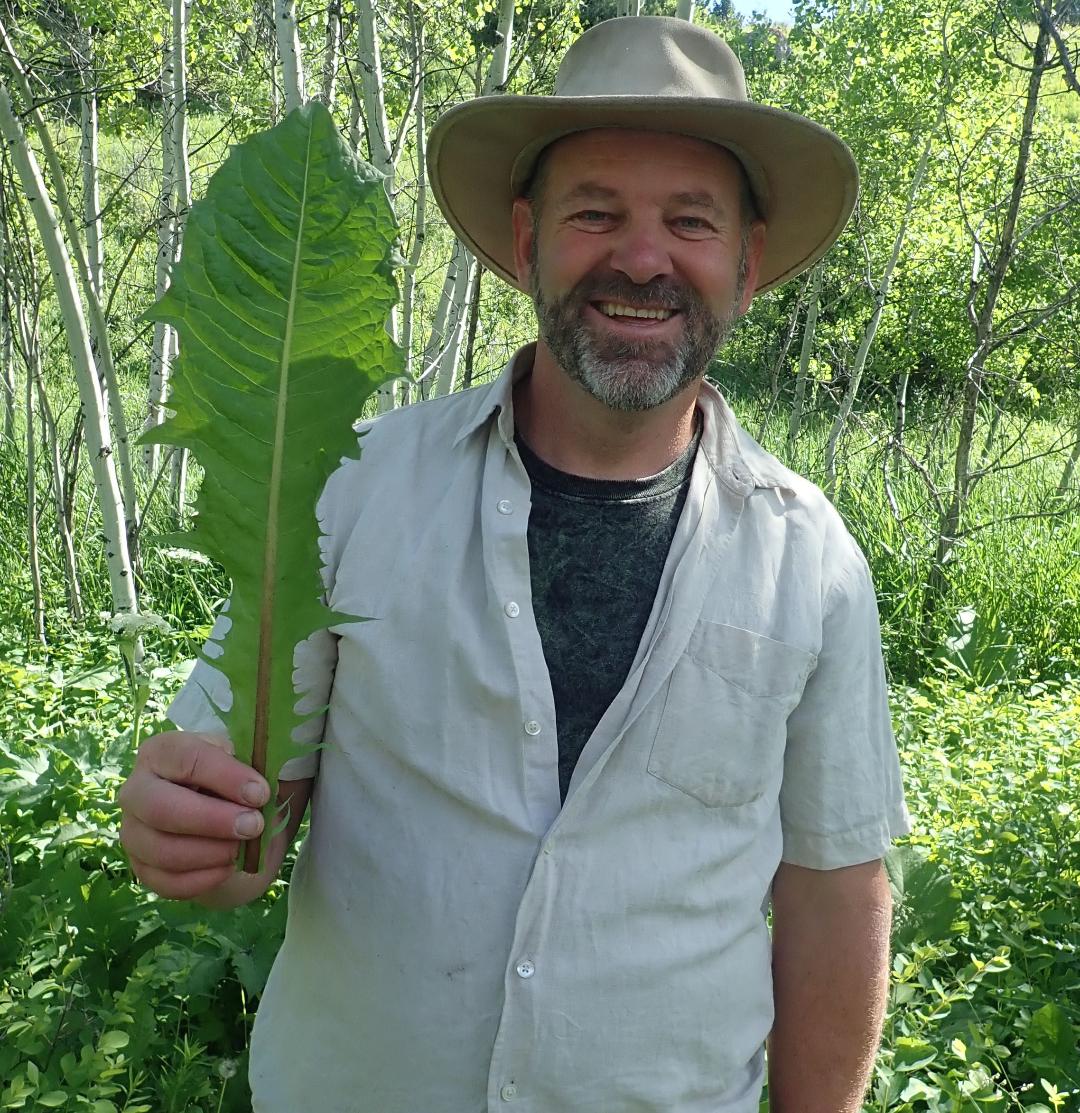
Tom Elpel is one of the foremost leaders of the outdoor movement, as a teacher, organizer, and author of many books.
He is perhaps most known for his popular “Botany in a Day” book, which teaches the patterns method of plant identification. Related plants have similar characteristics and often similar uses, so knowing these patterns can help you recognize new plants according to familiar traits. I have always told my students that Tom’s book demonstrates how botany ought to be taught in the schools.
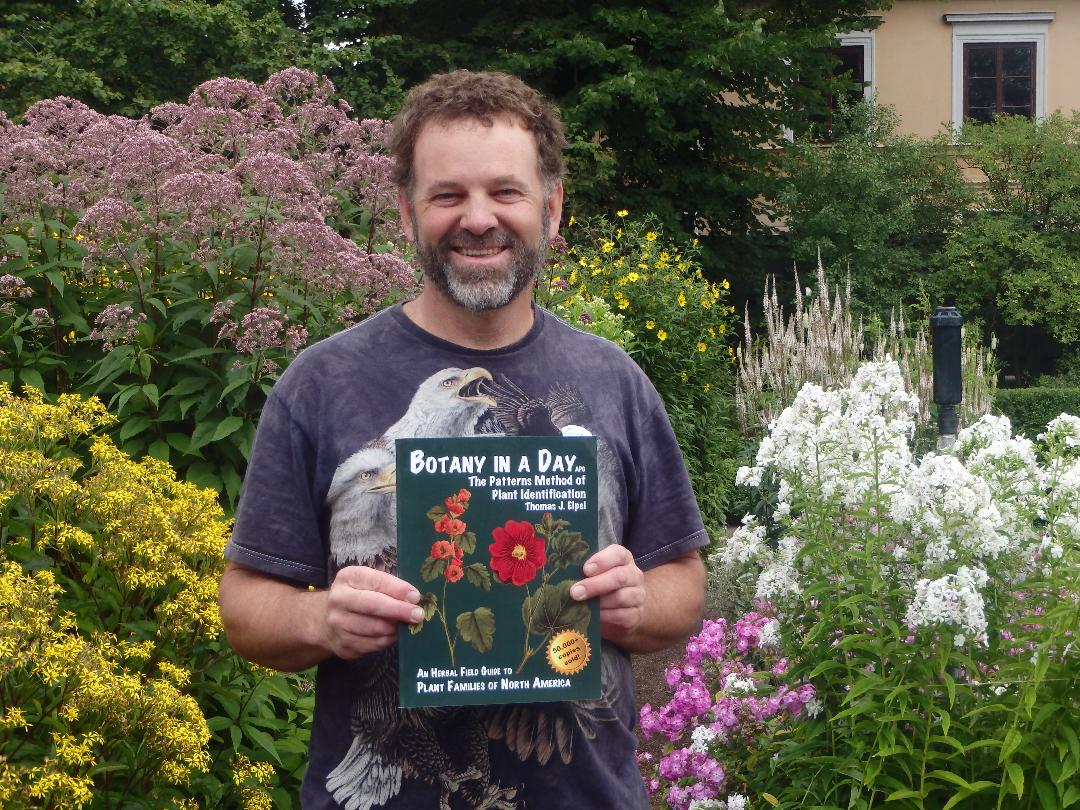
Elpel has also authored eight other books on topics ranging from wilderness survival to sustainable living. “Participating in Nature” introduces a hands-on approach to reconnecting with nature through wilderness survival and primitive living skills. “Foraging the Mountain West” is a guide to identifying, harvesting, and processing gourmet wild edible plants, mushrooms, and meat.
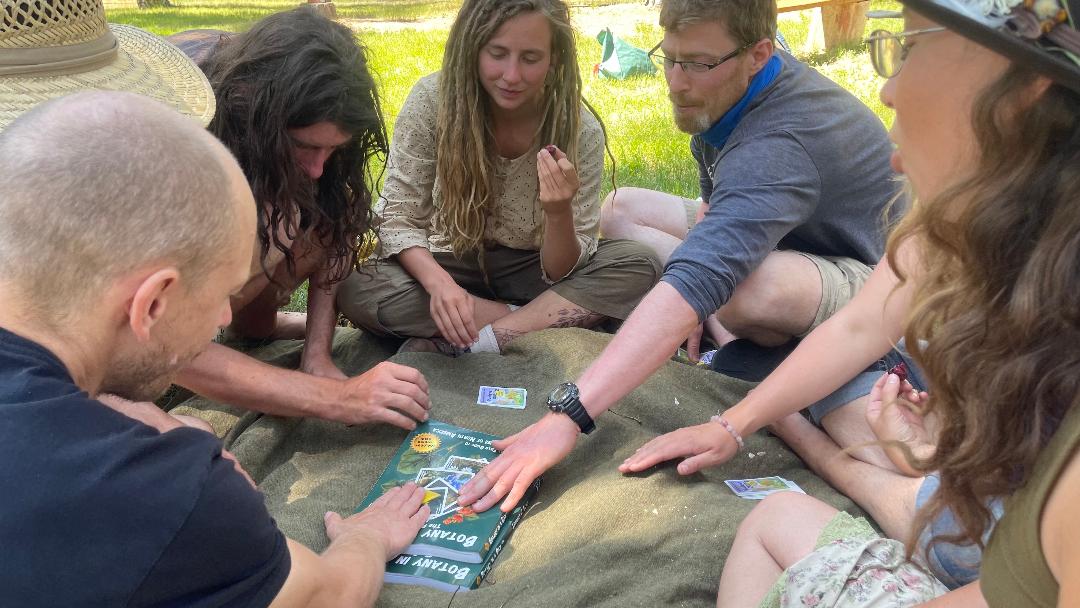
“Shanleya’s Quest” and “Shanleya’s Quest 2” are children’s botany adventure stories that teach plant identification, and each book has a companion card game to practice plant family patterns. Although written for children, the books and games include adult-level content and are regularly used in adult classes.
“Living Homes” is about homesteading in the modern world, with an emphasis on building energy-efficient homes of stone, log, and strawbale, ideally mortgage-free. “Green Prosperity” demonstrates how environmentally-friendly living is the path to freedom, allowing people to quit their jobs and live their dreams. “Roadmap to Reality” explores consciousness, showing how worldviews emerge and evolve over time, giving the reader tools to better understand and navigate the human realm.
“Five Months on the Missouri River” is Tom’s most recent book, recounting the story of carving a dugout canoe and leading a Lewis and Clark inspired “Missouri River Corps of Rediscovery” down America’s longest river from Three Forks, Montana to St. Louis, Missouri in 2019. The story and photo journey won three awards, including Writer’s Digest First Place Award for Nonfiction.
Tom was born in Silicon Valley, California and lived there until he was 12 years old. Both sides of his family were from Montana and he spent his summers there. “My heart was always in Montana” says Elpel, and he was glad to move there in time for Junior High. He considers himself a 4th generation Montanan, although he says he retains the California influence of always trying to grow apricots outdoors, and oranges and lemons indoors.
Elpel’s grandmother Josie Jewitt was a major influence in his life. She taught him many edible and medicinal plants early in his life and he loved spending time with her. She had an interest in wilderness survival skills, homesteading, and all things self-sufficiency. She had Larry Dean Olsen’s book “Outdoor Survival Skills”, which led to Elpel doing a 26-day walkabout with Boulder Outdoor Survival School.
Another big influence was Tom Brown. Elpel read his books in Junior high school and it fired his imagination for what was possible with nature connection. “It sold me on the idea of being able to go out in nature with only a knife to survive.” Elpel spent time as a teenager and young adult going out into the mountains to practice survival skills.
Elpel had no interest in the conventional lifestyle of getting a job and doing the 9-5 workday and paying rent and bills. “My interest in survival skills crossed over to how to meet my needs in the modern world without getting caught in the rat trap,” says Elpel. We have the same basic needs in the modern world as we do in the wilderness: Fire (warmth and power), water, shelter, and food. This influenced Elpel to build his own house with a passive solar power design and an indoor attached greenhouse, wood heat, and gravity-fed water from a spring.
Tom Elpel began homesteading in Pony, Montana at the age of 21, living in a tent while building his dream home of stone and log. Now 57, Elpel hasn’t moved, and likely never will.
In 2012, Elpel bought a 21-acre parcel for a wilderness survival camp along the Jefferson River, 1,200 feet lower in elevation, and 25 miles from home. Montana is famous for its eternal winters, where the trees don’t leaf out until mid-May, and snow is possible even in summer. River Camp is warmer and drier than the surrounding mountain country, facilitating wilderness survival programs throughout the year.
Elpel offers both youth programs and adult programs at River Camp through two separate businesses. Outdoor Wilderness Living School LLC (OWLS) works primarily with the public schools to get kids out of the classroom and more physically connected with the real world. OWLS offers day programs as well as multi-day camping trips, immersing students in wilderness survival and nature awareness skills.
Elpel emphasizes integration, where skills are used, not just practiced. For example, students may learn bow and drill fire-starting to build a fire, then use that fire to make burn bowls to eat from. The kids harvest any available wild greens or mushrooms and cook meals using often primitive methods, such as doing a stir-fry with hot rocks on a slab of tree bark.
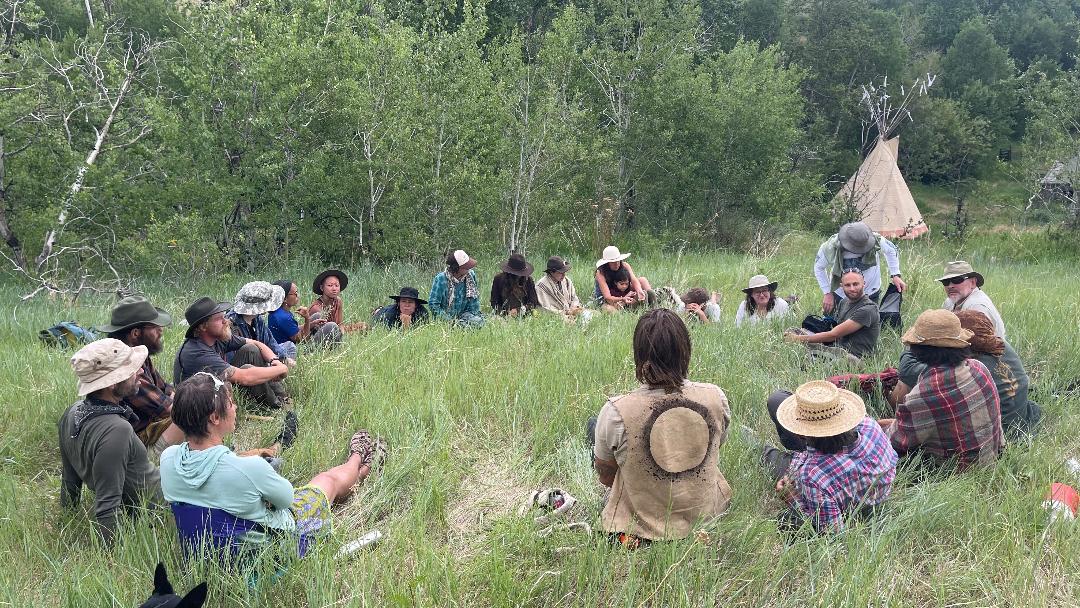
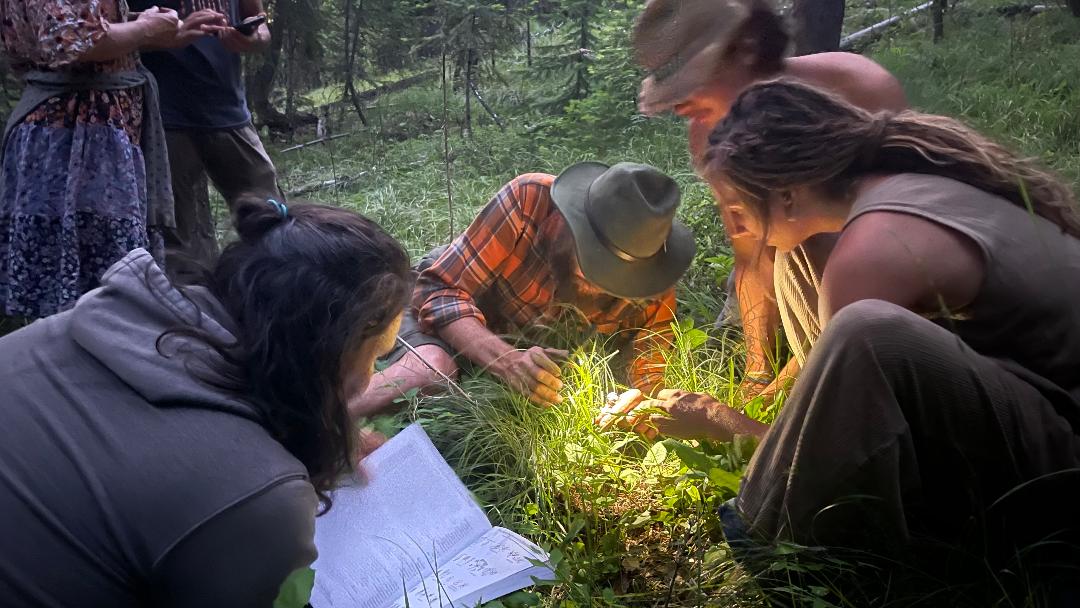
Green University LLC is the adult program, with primitive skills as primary emphasis, but with an eye towards long-term life skills. Most participants come for the year-long Hunter Gatherer Immersion, living in tents, yurts, wickiups, and an earthlodge for the duration of their stay. Animal processing, hide tanning, and clothing-making are central skills over the winter, while the summer is more focused on survival skills, plant identification, and wild food foraging.
Although the school offers some shorter classes, such as a two-week Botany & Foraging Intensive, Elpel prefers the long-term format, which fosters life-long relationships. Community or tribalism is the core of the Green University program, where students live together and cooperate towards harvesting and processing roadkill game and take turns cooking for the group. Students benefit from the comradery of living together with like-minded individuals, all learning and sharing with each other.
The year-long program features a mix of scheduled and unscheduled learning, an amorphous, almost anarchic teaching schedule that pulses with impromptu opportunities. In between scheduled activities, students pursue projects at their own pace. Students can implement their skills on wilderness survival canoe trips down the Jefferson River, and there is a fleet of canoes for students to use on their own time.
INTERVIEW
Q: Tom, how did you go about writing your first book?
A: I participated in a 26-day wilderness survival walkabout with Boulder Outdoor Survival School (BOSS) when I was sixteen and wrote a journal about the experience. I made twenty-five photocopies of the journal to give away, and my writing-publishing career grew from there.
I wrote how-to articles for local monthly newspapers that helped me accumulate the core text for “Participating in Nature.” My early books started out as photocopied publications with plastic-comb bindings and I progressively upgraded as I tip-toed into the publishing world.
I printed only 25 copies of the first edition of “Botany in a Day,” followed by 500 copies of the second edition, and 2,000 copies of the third edition, which was my first book with a paperback binding and a publisher ISBN. Now the book is in its sixth edition, and I print 10,000 copies once or twice per year.
Q: How did you learn about publishing and marketing?
A: I grew up pre-internet, when there weren’t so many resources at hand to guide a person through any new skill. Thus, my approach to learning was to “just do it,” to print books and then figure out how to sell them. “Botany in a Day” was the easiest book to market because I sent review copies to herbal schools and they started ordering in wholesale quantities for their classes.
Otherwise, writing articles and teaching classes have been the main marketing tools to spread the word about my books. I also started swapping inventory with other authors, so that I was selling their books, and they were selling mine. That greatly expanded our mutual exposure and sales. I’ve also spent a great deal of time developing a web presence, which now sprawls over 500 pages across ten interconnected websites, accessible through www.Hollowtop.com.
Q: What advice would you give to writers who want to follow in your footsteps?
A: People often say you should consider your audience and write what you think they want to read. I think that is terrible advice. Follow your passions and write whatever inspires you. I wrote “Botany in a Day” as a research project because I wanted to better understand plant family patterns myself. That proved useful to many other people as well, and I’ve sold 200,000 copies of the book so far, incrementally improving it through the past twenty-five years.
Q: What advice would you give to someone who wants to live more ecologically?
A: As I wrote in “Green Prosperity,” “The easiest way to achieve the most sustainable impact with the least effort is to eliminate unnecessary expenses and drop out of the rat race. Axe the job, and eliminate with it the need to commute back and forth. Eliminate the need for expensive, packaged convenience foods, and eliminate the need for a disposable lifestyle. In the process, become one less person consuming resources for meaningless work. Nurture your talents to offer a positive contribution to the world. We need to inspire a global movement of people committed to becoming successfully unemployed.”
That is ultimately the skill I most hope to teach through Green University, and I’m always thrilled when my students fully grasp the concept and successfully move on from our program without getting stuck back in the rat race.